




Genomic Surveillance of Foodborne Pathogens: The New Standard in Food Safety
In a globalized market, a single undetected outbreak can cost over $10 million and destroy decades of consumer trust. With the European Food Safety Authority (EFSA) transitioning to Whole Genome Sequencing (WGS) as the new indispensable standard for pathogen surveillance, food safety has shifted from a reactive approach to one of genomic precision. At Sequentia, we transform regulatory compliance into a strategic advantage through proactive, high-resolution surveillance.
The Industry Challenge: Managing Global Risk
The scale of the current food safety crisis is measured in both human and economic terms. According to the World Health Organization (WHO) Global Strategy 2022–2030, foodborne diseases remain a critical priority:
- Human Impact: Annually, an estimated 600 million people are affected by foodborne illnesses—nearly 1 in 10 people globally.
- Economic Magnitude: In low- and middle-income countries (LMICs), the annual impact related to medical costs and productivity is estimated at $110 billion.
- Protecting Brand Equity: While the average direct cost of a recall can exceed $10 million, the long-term priority is maintaining consumer confidence; data shows that 21% of consumers may change their purchasing habits following a safety incident.
Common Pathogens & Interaction Points
Understanding how pathogens interact with various supply chains is the foundation of an effective prevention strategy. Our technology helps identify and monitor key organisms across different sectors:
- Salmonella: Often monitored within poultry, egg, and fresh produce supply chains.
- Listeria: A priority for the deli meat and soft cheese sectors in the EU and US due to its persistence.
- Campylobacter: Frequently analyzed in raw poultry and dairy environments, particularly in the European Union.
- E. coli (STEC): A key focus for ground beef and leafy green producers to ensure safety standards.
- Norovirus: Closely tracked in ready-to-eat (RTE) foods and shellfish logistics.
The Genomic Revolution: WGS vs. Traditional Methods
The traditional method (PFGE) is slow, low-resolution, and often misses small or diffuse outbreaks. Sequentia is driving the shift toward Whole Genome Sequencing (WGS):
| Feature | The Old Way (PFGE) | The New Way (WGS) |
| Speed & Precision | Slow & Low-resolution | Fast & Ultra-high precision |
| Sensitivity | Often misses small/diffuse outbreaks | Solves outbreaks with as few as 2 cases |
| Approach | Reactive: Required epidemiological clues first | Proactive: Lab data detects outbreaks first |
Outcome: By identifying precise genetic matches between isolates, WGS provides robust, defensible evidence to pinpoint contamination sources—enabling faster recalls, targeted interventions, and the prevention of further illness.
PROKY™: Your Decision Engine for Genomic Surveillance
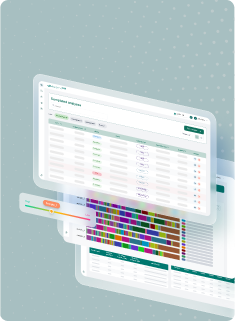
- Comprehensive isolate profiling: A true “end-to-end” solution that manages everything from raw sequence quality control to full genomic characterization, including de novo assembly, functional annotation, and high-resolution serotyping.
- Comparative intelligence & outbreak tracking: PROKY™ aggregates data across multiple samples to visualize genetic lineages through high-quality phylogenetic trees and SNP distance matrices—essential tools for confirming transmission chains during epidemic investigations.
- Advanced risk & virulence detection: The platform automatically scans for antimicrobial resistance (AMR) genes and virulence markers, including critical resistance to biocides and disinfectants, ensuring a holistic view of pathogen risk.
- Genetic mobility analysis: By detecting plasmids and mobile genetic elements, PROKY™ determines their association with resistance genes, providing a crucial understanding of how “superbugs” evolve and spread.
- Regulatory & compliance readiness: Built to exceed ISO 13485 and ISO 23418 standards, PROKY™ ensures your laboratory is future-proofed against upcoming EFSA mandates for mandatory WGS analysis.
- Proven economic impact: Beyond enhancing safety, adopting real-time WGS surveillance through PROKY™ is a sound financial investment; research indicates a 3-fold return on investment (ROI) for institutions by averting costs associated with uncontained outbreaks.
Resources & References
-
- EFSA Strategy 2022–2027: Science, Safe Food, Sustainability. Explore the European framework moving towards the mandatory implementation of WGS for foodborne pathogen surveillance in the EU.
- WHO Global Strategy for Food Safety 2022–2030. A strategic framework for strengthening national food safety systems and promoting global cooperation.
- FAO: The impact of WGS on Food Safety Management. Detailed technical insights on the application of Whole Genome Sequencing for high-resolution pathogen surveillance.
- NIH: Impact of Real-Time Genomic Surveillance on Infection Prevention. Evidence-based study demonstrating the clinical and economic benefits of WGS in preventing healthcare-associated infections.